Managing unknown service lines for LCRI
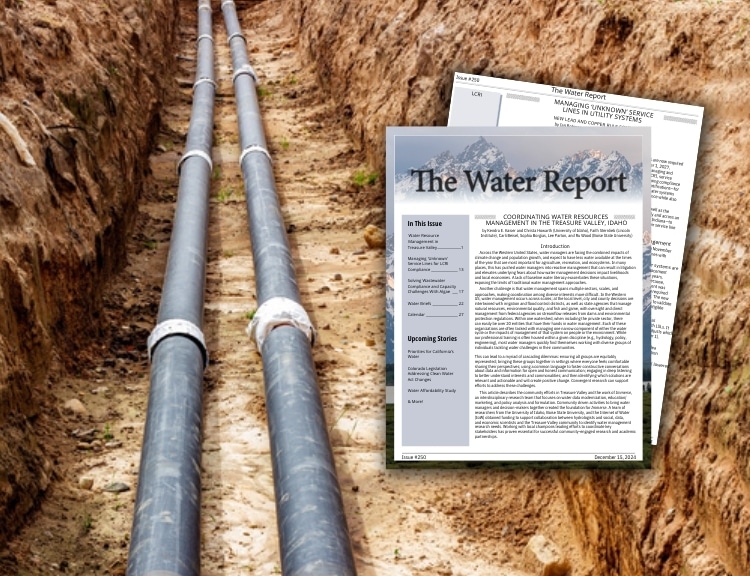
Discover how predictive modeling helps utilities manage unknown service lines for LCRI compliance. BlueConduit’s COO, Ian Robinson, shares insights in The Water Report on reducing compliance burdens and streamlining service line inventories.
Data-driven LSL replacement highlighted

Thank you to Water Finance & Management for featuring BlueConduit in their Water Innovation of the Month series! Read the full post here. The new Lead and Copper Rule Improvements (LCRI) mandates lead service line (LSL) replacement within 10 years. But did you know that the current $15B Bipartisan Infrastructure Law (BIL) allocation for lead […]
LCRI plans: unknowns & prioritization

BlueConduit’s LSL Predictions and new LSL Replacements tools focus on unknown management and LSL replacement prioritization, respectively. This article explores the value of and requirements for unknown management and replacement prioritization in the context of Lead and Copper Rule Improvements (LCRI) compliance and beyond.
Reducing unknowns with predictive modeling

If you have service lines of unknown material in your inventory, there are many reasons to choose predictive modeling to classify these unknown lines: Compliance, feasibility, time and effort are just a few. In this blog post, we’ll highlight the value of predictive modeling to quickly and efficiently reduce the unknowns in your inventory.
Evaluating water main predictive models

Using AI predictive modeling solutions can save water utilities billions of dollars. Predictive modeling for water mains identifies the likelihood of failure for every main, which helps assess risk and enable proactive maintenance and replacement. This article explores the 3 core needs to consider when selecting a predictive modeling solution like BlueConduit for water infrastructure management: the modeling approach, prediction accuracy and explainability, and integration with your everyday tools and processes.
America’s next water crisis? A lack of experienced workers

BlueConduit’s products empower water systems with accurate predictions, decision support, actionable recommendations, and automation—driving greater efficiency and effectiveness. As the industry faces the challenges of the “gray tsunami,” our solutions provide the insights and tools needed to navigate workforce transitions and maintain reliable operations. This blog highlights how climate change and aging infrastructure already threaten […]
Using modeling to meet LCRI requirements
Discover how predictive modeling helps water systems meet state-specific LCRI compliance requirements. Learn how states like Massachusetts, North Carolina, and Ohio approach classification thresholds for lead service lines and how BlueConduit supports utilities in making defensible, data-driven decisions
New tool for LSL replacement planning
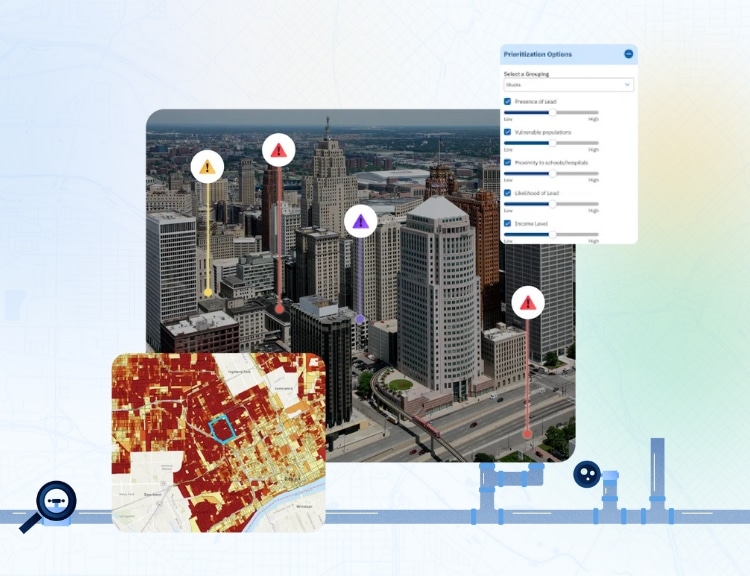
New Esri-integrated software enables data-driven prioritization, planning, and tracking in compliance with the Lead and Copper Rule Improvements (LCRI)
Clustering LSLs to prioritize replacement

What is data clustering and why is it important for LSL replacements? Learn more about why grouping data into larger locations is important for lead pipe replacement and how BlueConduit’s new LSL Replacements tool can help.
Proactive maintenance for small mains
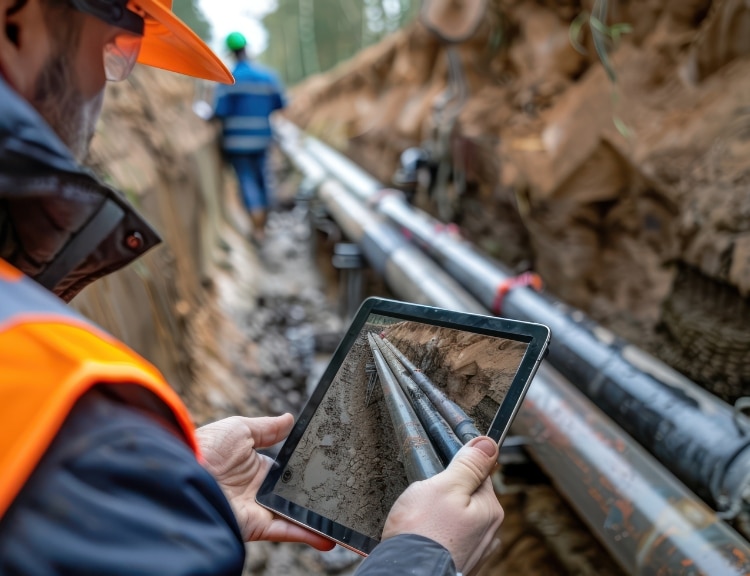
Learn why a proactive management approach matters for small diameter water mains and how predictive modeling can help identify those small diameter mains that are most likely to fail. This article highlights BlueConduit’s Water Main Predictions software and the Mobile Area Water and Sewer System’s (MAWSS) work to proactively manage small diameter water mains.
How predictions shape line classification

What does it mean to use predictive modeling to classify lines in your service inventory as lead lines or non-lead? We review the process behind generating predictions from your data and what it means for you.
Prioritizing LSL replacement strategies
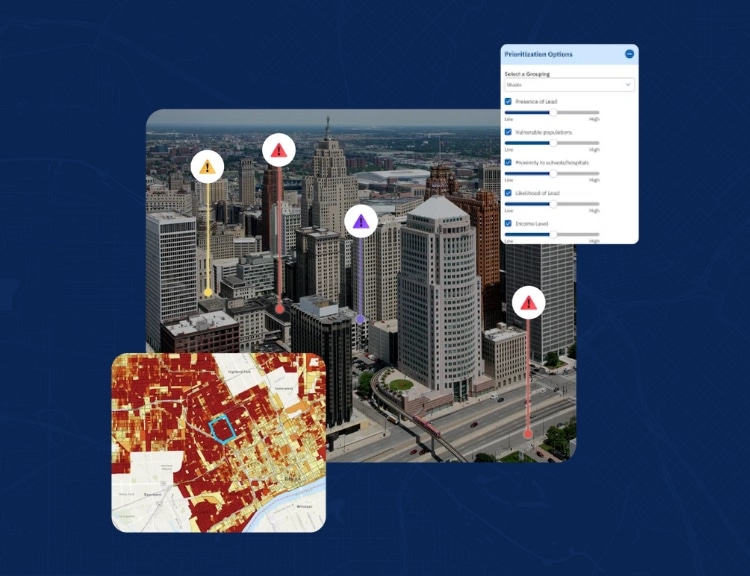
Learn why data-driven replacement prioritization matters when it comes to lead service lines and how BlueConduit’s new LSL Replacements tool manages prioritization.
Planning LSL replacements with BlueConduit

Learn from BlueConduit CEO, Lorne Groe, about the LSL Replacements tool for optimizing lead service line replacements to maximize public health outcomes, economic efficiency, and other local needs.
Managing water infrastructure risk in Alabama

Did you know that Alabama’s drinking water infrastructure got a grade of C- on the most recent Report Card for Alabama’s Infrastructure? This 2022 report card provides clear and specific recommendations for improving the C- grade for drinking water, including: “Provide resources for infrastructure asset mapping…computerized preventative maintenance and asset management planning, and long-range strategic […]
Colorado’s water crisis: 20,000 lead pipes must be replaced
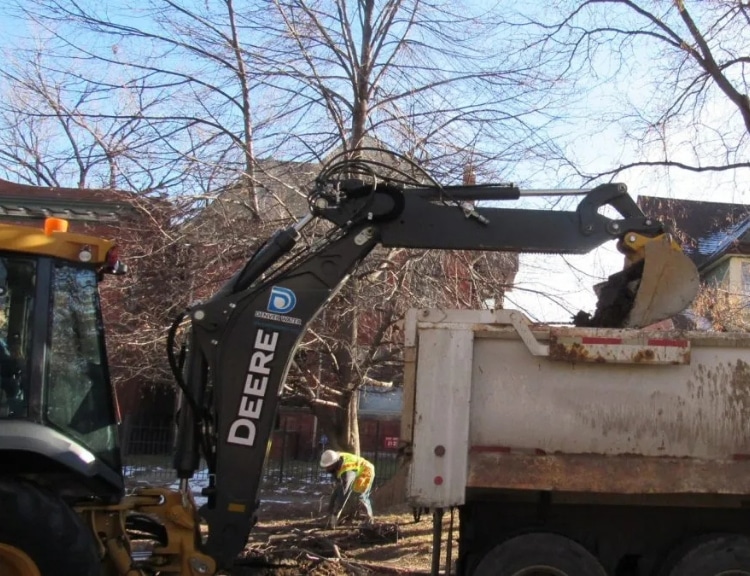
Lead service line replacements are a pressing issue for the water industry, as aging infrastructure continues to pose risks to public health. This blog highlights the challenges faced by Colorado cities as they work to identify and replace lead pipes, underscoring the importance of proactive efforts to ensure safe, clean drinking water for all. Read […]
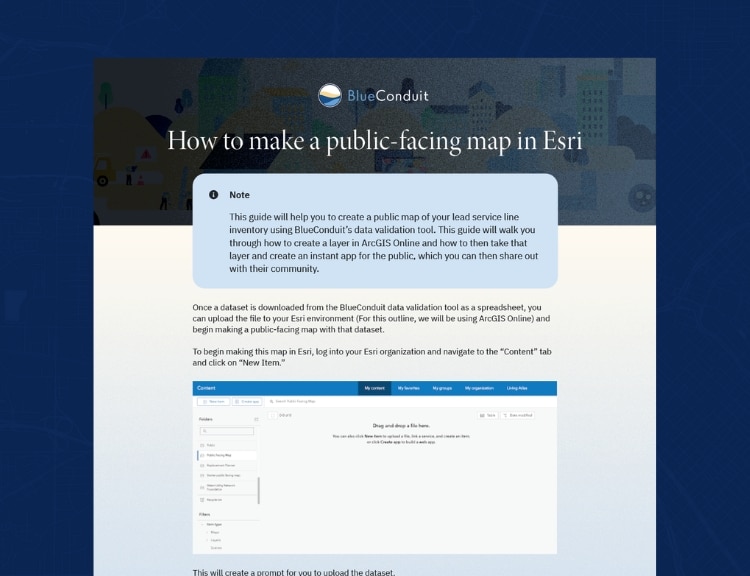
How to create a public-facing map in Esri
BlueConduit and Pennsylvania: By the numbers
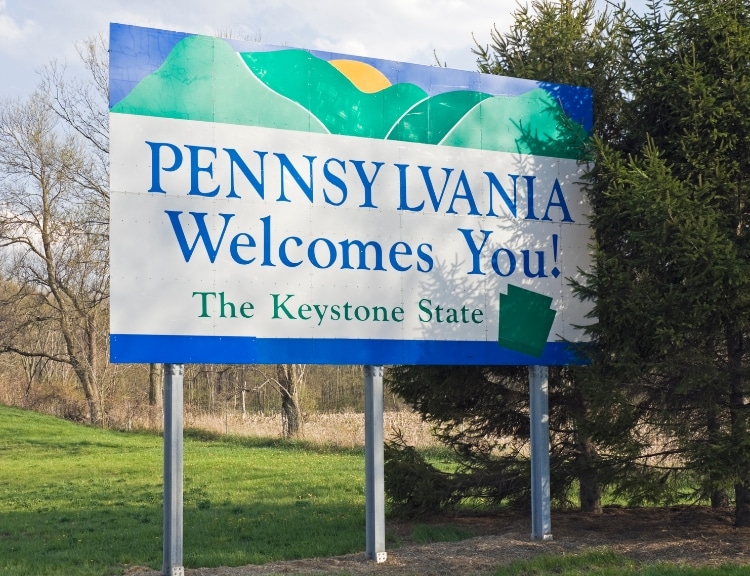
This post outlines some quick numbers for water utilities in Pennsylvania and why BlueConduit is the best partner to help PA water systems and engineering firms replace their lead service lines (LSLs).
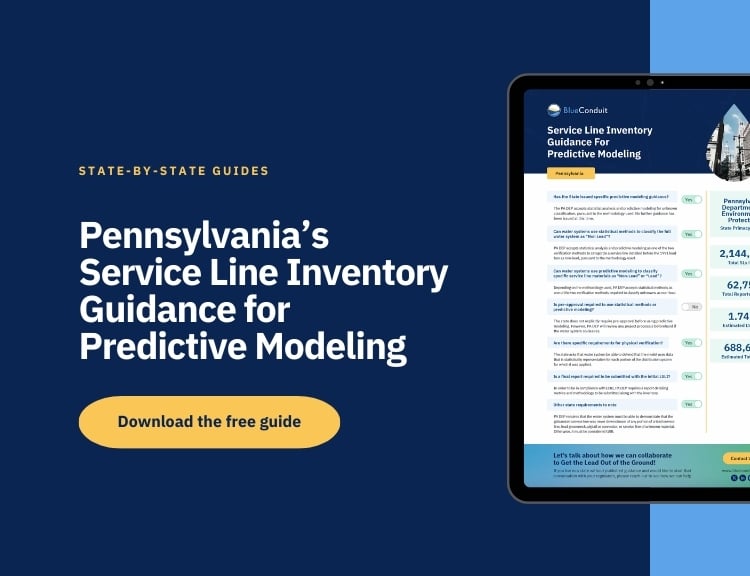
Pennsylvania’s Service Line Inventory Guidance for Predictive Modeling
Why your service line inventory isn’t done
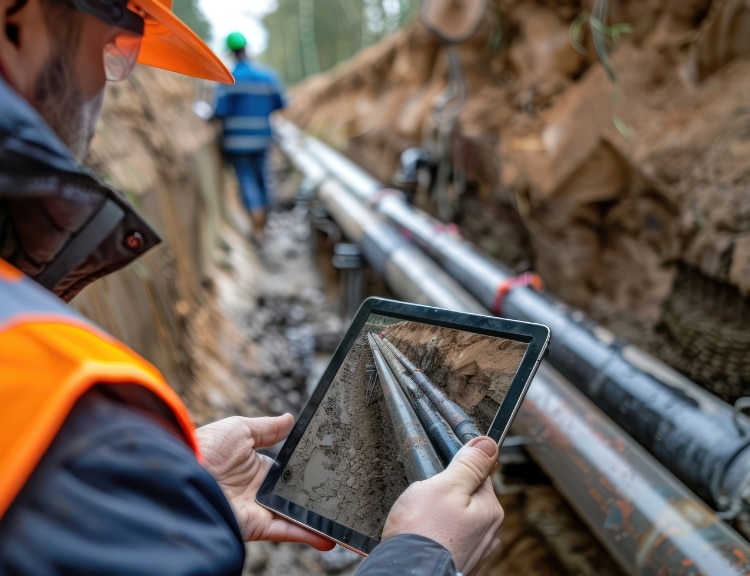
Water systems across the US submitted their inventories to their state regulators as part of LCRR compliance on Oct. 16, 2024, and the first “real” hurdle is over. It may feel like the finish line, but it’s actually just the first step.
Q&A: predicting large diameter main risk

Learn how predictive modeling can assess large-diameter water main risks, even with limited break history. Discover how BlueConduit’s data-driven approach helps prioritize maintenance and reduce costly failures.
Meet the team: Charley Shamaly
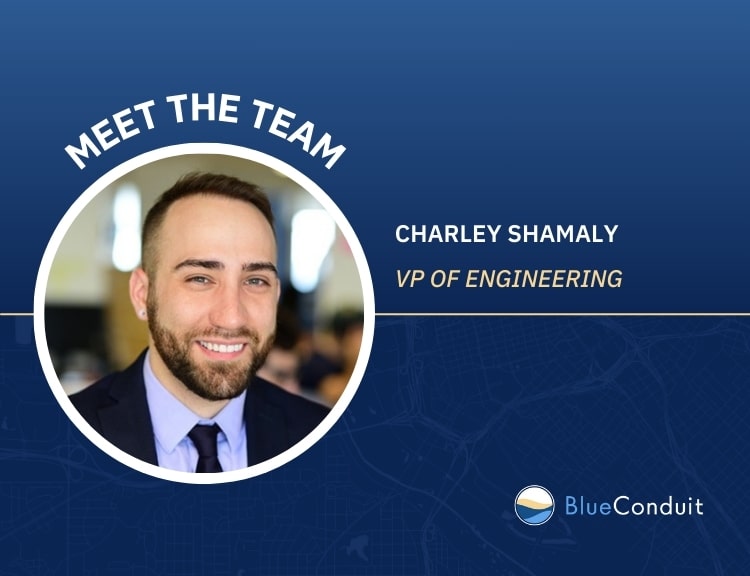
Charley is BlueConduit’s VP of Engineering. Get to know Charley through this quick Q&A.
Predictive analytics for water main risk

Forward looking water main management is critical for water utilities. With responsibilities that include water safety, water loss, keeping customer rates low, and minimizing public disruption, utility leaders have their hands full. A comprehensive, efficient approach to understanding the state of their buried water infrastructure and addressing risks before they become big problems is critical. […]
Goshen case study: validating no lead

Goshen is a city of 35,000 people in northern Indiana. It has been a city-owned and operated water utility since the 1830s with roughly 12,000 service lines. They chose to use predictive modeling to reduce service lines of unknown material in their system after exhausting their pre-existing identification methods, including records review, home age analysis, […]
How AI accelerates lead pipe removal
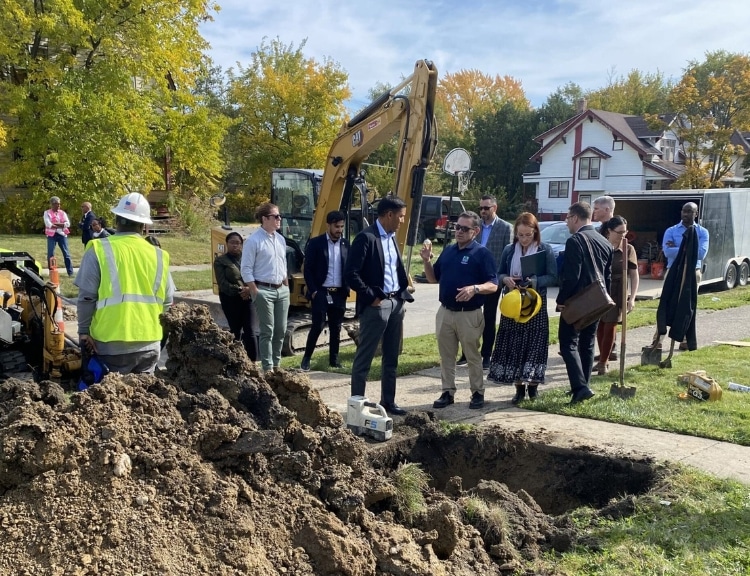
This article was originally published on The Rockefeller Foundation website. Imagine sitting down at your dinner and being asked: “Tap water with lead, or bottled?” It’s not a question anyone wants to hear, but this remains the reality for over nine million households in America still serviced by water main pipes made of lead that connect to […]
BlueConduit announces Charley Shamaly as VP of Engineering

December 19, 2024, Ann Arbor, Mich. – BlueConduit is pleased to announce the addition of Charley Shamaly, Vice President of Engineering, to its leadership team. Shamaly’s addition brings more than 20 years of software engineering and leadership experience to BlueConduit and accelerates the company’s ability to develop AI and predictive modeling technology for water systems […]
Cities miss deadline to identify lead

We’re excited to share that BlueConduit was recently featured in InvestigateTV for our work in using predictive modeling to locate and replace lead service lines across the U.S. Below is a snippet from the article. Read the full post here. Futuristic solutions to a century-old problem Despite the numerous challenges surrounding lead service line replacements, […]
Team voices: why we’re proud to work at BlueConduit

The end of the year always makes us reflect on what we’ve accomplished and what we’re grateful for. At BlueConduit, we’re incredibly grateful for our wonderful customers, partners, and team members. Take a look at what they’re most grateful for at the end of 2024. “I’m thankful for our customers’ eagerness to dive into model […]
2024 in review: what partners value most

The end of the year always makes us reflect on what we’ve accomplished and what we’re grateful for. At BlueConduit, we’re incredibly grateful for our wonderful customers, partners, and team members. Take a look at what they’re most grateful for at the end of 2024. “I am grateful for the help BlueConduit provided to [Des […]
Proactive water main planning in Mobile
Mobile Area Water and Sewer System (MAWSS) provides water and wastewater services to over 100,000 customers in Mobile, Alabama and surrounding areas. On average, MAWSS delivers 41 million gallons of clean water per day through 1,605 miles of water mains. MAWSS’ drinking water is sourced from nearby Big Creek Lake. Roughly 50% of the water […]
Unknown management for no and low lead: by the numbers
Water systems with historically low or no levels of lead may think they’re in the clear when it comes to LCRI compliance – after all, they don’t have many (or any) pipes to replace. But if there are any lines of unknown material, they must be presumed lead until classified otherwise.